When Will We Learn? Hallucination Hell
By Edward McIntyre
A recurring series where fictional characters discuss real
ethics scenarios. Macbeth, a long-recognized expert in legal
ethics, professional responsibility, and the law of lawyering
is joined by his nephew Duncan and Sara, the very bright
newest member of the firm.
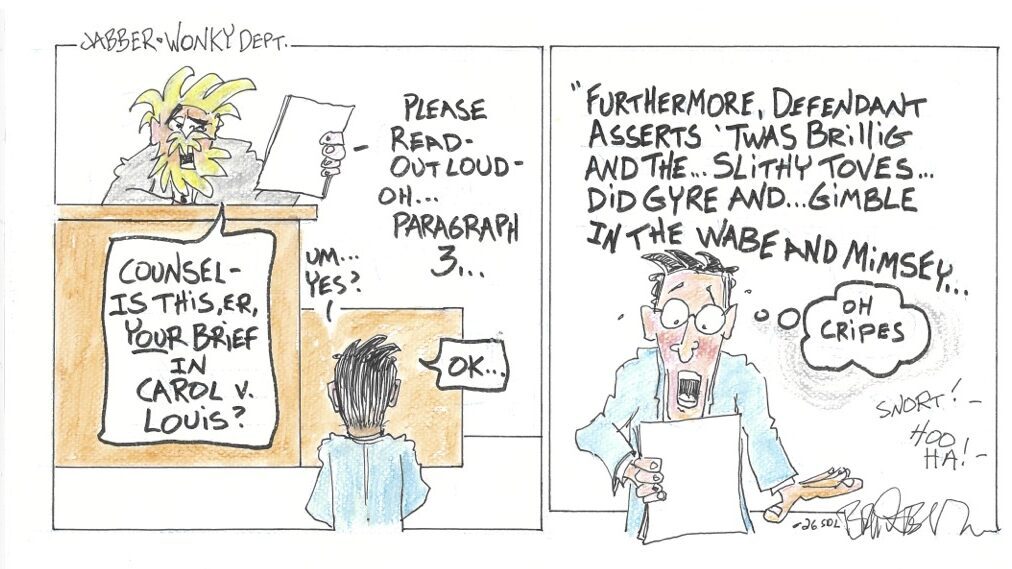
As Macbeth finished up last-minute holiday shopping, Aaron Brewster stopped him.
“Macbeth, read about that $10,000 sanction? Another AI case. Keeping you guys busy?”
“Just a bit. Got time? I’ll fill you in.”
“I’m finished for the day—.”
“Walk back to my office. Easier to talk there. I’ll text Sara and Duncan.”
All four seated at the conference table, Macbeth nodded to Aaron.
“Just mentioned to Macbeth that $10,000 sanction. Gotta’ hurt.”
Sara smiled. Ducan shook his head.
Macbeth: “As of [November 24] there have been more than [400] cases in the United States alone. Judges’ written decisions on AI misuse. That’s since June 2023—less than three years.”
Sara: “More than [39] in California. Some courts have reported lawyers to the State Bar.”
Duncan: “California has more than [10] percent of the US cases. Worldwide, the US makes up more than 65 percent.”
Aaron: “A race to the bottom? US and California leading the way. What’s the ethics gurus’ take on all this?”
Macbeth: “Most often, AI generated citations for cases that don’t exist.”
Sara: “Quotations that weren’t there. Real cases, but for false propositions.”
Macbeth: “We mocked that New York lawyer who got this started. Cited cases to a federal judge that didn’t exist. Used ChatGPT for research.”
Aaron: “So, ethics gurus—”
Sara: “Rule 1.1 makes clear that part of our competence obligation includes staying aware of the risks and benefits of technology.”
Duncan: “Non-existent cases. Couldn’t have even looked at them.”
Macbeth: “A brief shower in what’s now a tsunami. Since then, judicial decisions highlight nonexistent cases or nonexistent quotes.”
Sara: “Hence, a rule 3.3(a)(2) issue.”
Aaron: “Hey, you’re way ahead of me.”
Sara: “Knowingly misquoting the language of a decision to a tribunal.”
Duncan: “Then there’s section 6068(d).”
Aaron: “English?”
Duncan: “Misleading a judicial officer with a false statement of fact or law.”
Macbeth: “Most courts cite authority other than the rules. When imposing sanctions. But at least one court cited rule 3.3 and section 6068(d).”
Sara: “A criminal defense lawyer. Took responsibility. But blamed hallucinations on his staff. Money sanctions. Referral to the State Bar.”
Aaron: “No discipline? Just sanctions?”
Macbeth: “California lawyer discipline is exclusively the province of the State Bar—as the Supreme Court’s agent. State court judges have no authority to impose discipline.”
Duncan: “But they’ve got other tools. Money sanctions. Ignore pleadings. Even dismissal.”
Sara: “Don’t forget California’s federal district courts. Each has independent discipline regimes. A judicial officer can refer a lawyer for investigation. Possible prosecution.”
Aaron: “Wow! Didn’t know that.”
Sara: “Federal courts have even imposed suspension as a sanction.”
Macbeth: “Then there’s Rules 5.1 and 5.3. Require managers to have policies and practices to ensure firm lawyers adhere to the rules. State Bar Act.”
Sara: “Supervisors have the same obligation. Make sure lawyers and non-lawyer personnel obey the rules.”
Macbeth: “With the possibility of vicarious discipline liability.”
Aaron: “What?”
Macbeth: “If a manager or supervisor knew about misconduct. Didn’t take reasonable remedial action that could have mediated the consequences, yes.”
Aaron: “You mean a guy who didn’t file phony citations could still be disciplined?”
Macbeth: “If he knew and didn’t take reasonable remedial measures, yes.”
Aaron: “Where’s all this going?”
Macbeth: “Never predict what the State Bar will do. But judicial referrals get attention. As violations increase, it may be forced to take up the more egregious cases. Who knows.”
Sara: “But no one can now say: ‘I didn’t know.’”
Macbeth: “I also see a client saying, ‘Not paying you outrageous fees to use a machine to screw up. Hurt my case. Irritated our judge. What’re you going to do about it?”
Aaron: “Pocket book issues get attention.”
Macbeth: “We’ll see.”
Editorial Note: Noland v. Land of the Free, L.P. (2025) 114 Cal.App. 5th 426, is the $10,000 sanctions case. https://www.damiencharlotin.com/hallucinations/ tracks judicial decisions.